Overview
Physical Form — Job 41
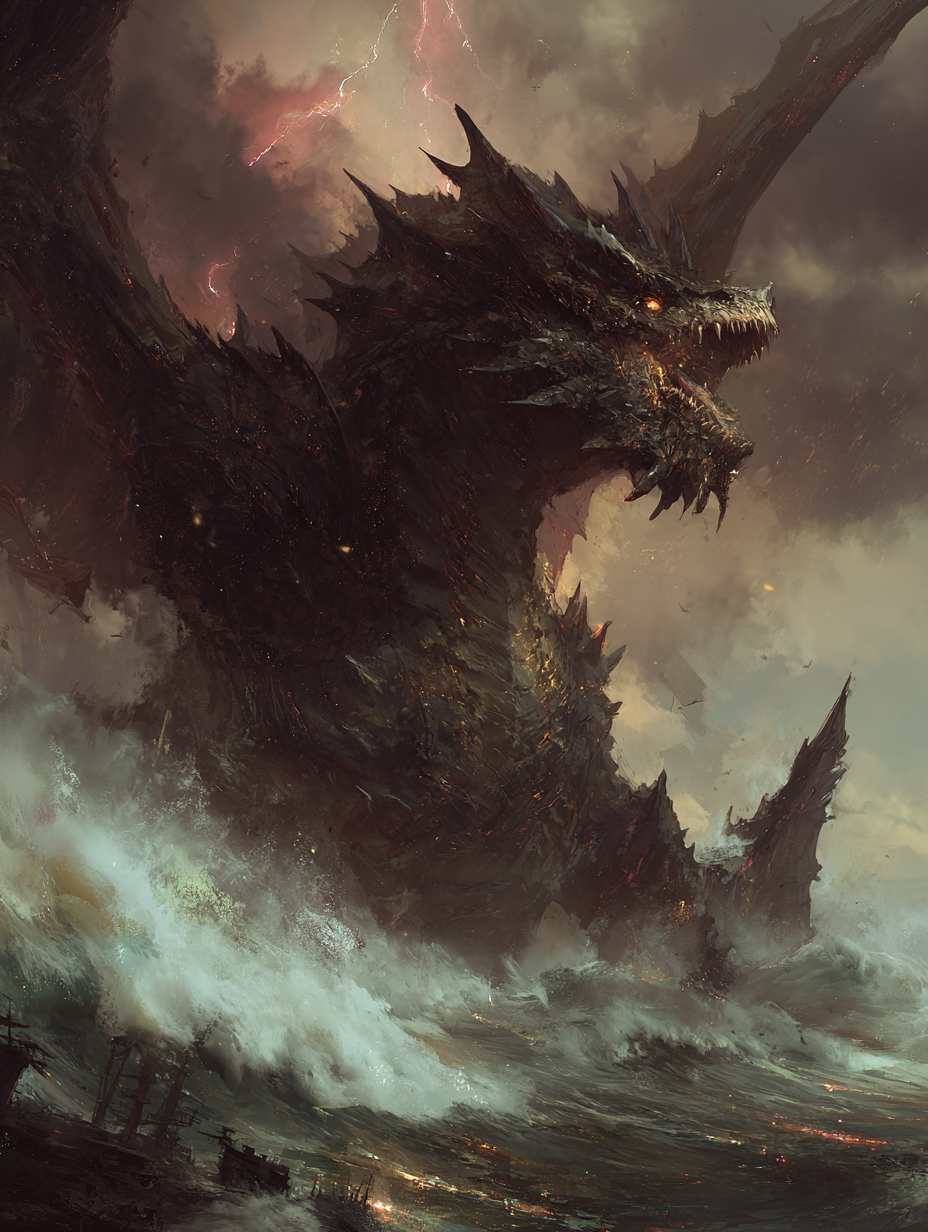
Job 41 is the most detailed biological description of any creature in Scripture, and it reads like a field report from someone who barely survived the encounter. Rows of scales so tight that no air passes between them. Breath that kindles coals. Smoke from its nostrils. Eyes like the eyelids of the dawn. A neck so strong that terror dances before it. Its underside — sharp potsherds — leaves a furrow in the mud wherever it passes. When it rises from the water, the mighty are terrified. The sword that touches it laughs at the sword in return. 'He beholds all high things; he is king over all the children of pride.'
The Ugaritic Connection
Before it entered Hebrew cosmology, Leviathan was Lotan — the seven-headed sea dragon slain by Baal in the Ugaritic Baal Cycle. The imagery passed directly: the coiling serpent, the dragon of the deep, the enemy of cosmic order. Isaiah 27:1 preserves this exactly: 'In that day the Lord will punish Leviathan the fleeing serpent, Leviathan the twisting serpent, and he will slay the dragon that is in the sea.' Three names. Three forms. The Hebrew tradition absorbed the Ugaritic cosmology and reframed it — Leviathan is not yet slain. It is reserved. The killing is scheduled for the end of days.
Eschatological Role
2 Esdras 6:49–52 and the Talmudic tradition (Baba Batra 74b) state that Leviathan and Behemoth were created as a male-female pair, but their union would have destroyed creation — so they were separated. At the end of days, they are to fight each other, and the righteous will feast on their flesh. The eschatological meal framing Leviathan as food for the end-time feast is one of the most extraordinary images in the entire tradition: the monster that could not be defeated in history becomes the meal that marks the end of history.